
Most obstacles aren’t real barriers—they’re rules we’ve created in our own minds.
Weeks 14 and 15 took me to Taiwan.
Before leaving on March 27, I had already built momentum. I was worried that travel would interrupt the rhythm I had worked hard to establish. Different time zones, unfamiliar surroundings, and the accessibility of equipment or resources all felt like potential obstacles.
But looking back now, most of those obstacles weren’t real.
They were rules I had created in my own mind.
At first, I went to a large chain gym, World Gym. It cost a little more than I expected, but it had plenty of machines and, more importantly, it was empty early in the morning when I like to train. That alone reminded me that accessibility wasn’t the problem—I just needed to act.
Then I found a second gym that I completely fell in love with.
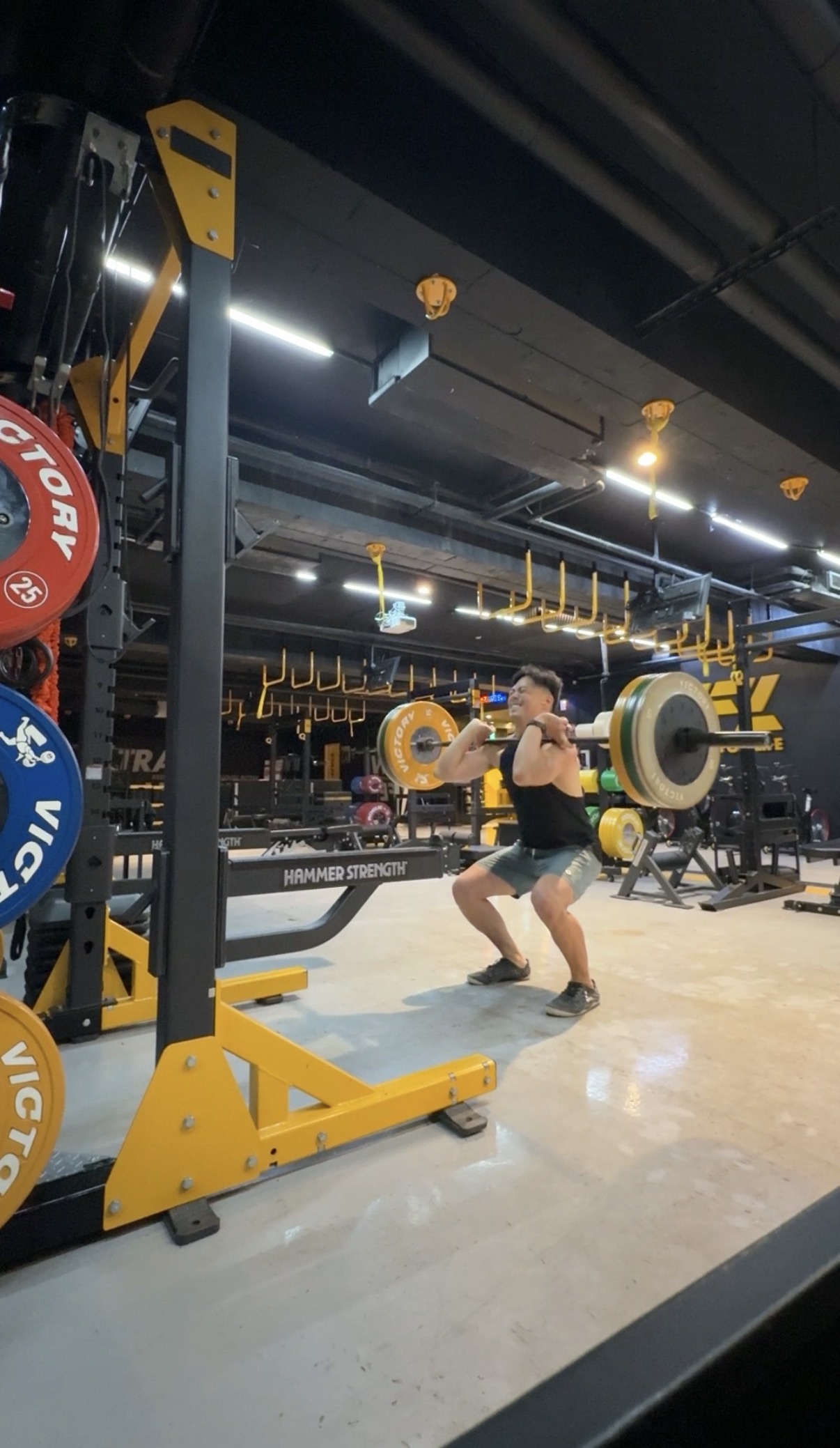
It was a small boutique-style gym, very similar to the one I train at back home. The owner was incredibly family-oriented. Even though they officially opened at 8 AM, he trusted me enough to show me how to enter the building myself so I could work out at 6 AM. Most mornings, I had the entire gym to myself. TFL in Taipei was perfect for my needs and I plan to go back when I travel back to Taipei.
The equipment was excellent. Plenty of squat racks. A modern, progressive design. An energetic atmosphere that made it easy to focus and stay consistent. It didn’t feel like a compromise—it felt like an opportunity.
What feels difficult is often just unfamiliar, not impossible.
I also found ways to keep running. I even got in cold plunges and sauna sessions with the help of my dad. Those moments meant a lot—not just physically, but personally. Training alongside family in a different part of the world added meaning to the routine I’ve been building. My wife and cousin also joined me at the gym and it helped push me.
Before the trip, I worried that being surrounded by amazing Taiwanese food would set me back. I expected progress to stall or even reverse.
But that didn’t happen.
A few days after returning home, I stepped on the scale and saw 168.6—finally breaking below the 169 mark I had been working toward.

That number meant more than just progress. It confirmed something I had been learning throughout these two weeks.
Consistency is easier than we think.
Not because the work itself is easy, but because most of the difficulty comes from the stories we tell ourselves before we even begin. The assumptions about what will be hard. The hesitation around unfamiliar environments. The belief that routines only work when conditions are perfect.
But purpose changes that.
When purpose is strong, obstacles become logistics instead of limits. You stop asking whether something is possible and start figuring out how to make it happen.
These two weeks reminded me that consistency doesn’t depend on location. It doesn’t depend on perfect conditions. It depends on mindset, preparation, and the willingness to act even when things feel inconvenient.
Most of all, it reminded me that many of the rules that make life feel difficult aren’t real.
They’re just stories we haven’t tested yet.
And once we test them, we often find that consistency was easier than we thought. Lfg.
Leave a Reply